

Louis Vuitton Bags
Louis Vuitton bags come from a tradition rooted in travel, yet the Monogram has moved through very different formats and interpretations. From Keepall to artistic collaborations, coated canvas, denim and contemporary materials transform one of the house’s most recognisable codes. MilanoMarktPlace focuses on models where format, motif and creative provenance tell different stories within the same Louis Vuitton identity.
Explore more styles in our Women's Luxury Bags selection.
2 products
Louis Vuitton bags: the Monogram between travel and fashion
Louis Vuitton's identity has been linked to movement since the origins of the house. Born in the world of luggage, Louis Vuitton gradually transformed trunks and travel pieces into a design language that now spans travel bags, everyday models and artistic collaborations. The Monogram has become the common thread of this evolution: it can follow the soft volume of a holdall, cover a more compact structure or become the base for colours, embroidery and contemporary reinterpretations.
This ability to change without losing recognisability is exactly what makes the house's bags so different from one another. A Keepall retains a direct relationship with travel and capacity, while smaller models turn the Monogram into a graphic surface for everyday use. Material, size and construction therefore matter just as much as the LV motif itself.
Monogram canvas, leather and contemporary materials
Monogram canvas is one of the materials most immediately associated with Louis Vuitton, but its effect changes dramatically depending on the bag on which it is used. On a soft, spacious structure, the pattern follows curves, folds and volume; on a more rigid silhouette, it is organised within a more precise geometry.
Leather trims introduce a second visual layer. Handles, edges, straps and inserts can create colour contrasts or remain close to the tones of the canvas, changing the character of the same Monogram without reducing its recognisability.
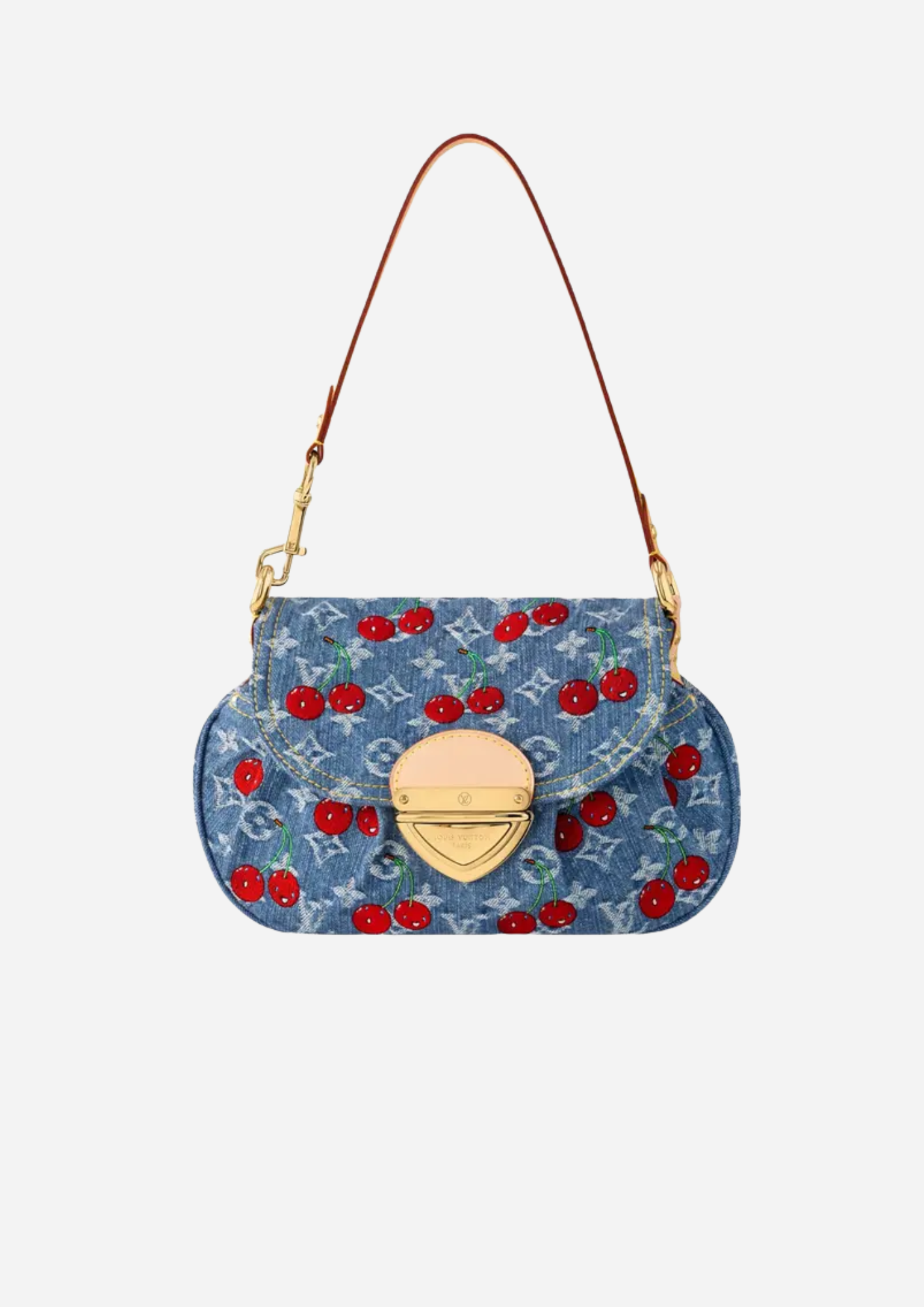
Louis Vuitton has also reinterpreted its codes through denim, embroidery, leather and contemporary materials. Monogram denim, for example, keeps the LV motif but changes the perception of the surface completely compared with traditional coated canvas: it feels more textile and less uniform, and can become a base for appliqués and graphic interventions.
The choice of material is therefore not only aesthetic. Canvas, leather and textiles react differently to use, affect the weight of the bag and influence how well the structure retains its shape over time.
Travel bags, top-handle bags and shoulder bags
One of the most important differences between Louis Vuitton bags lies in the relationship between size and function. Travel bags are designed to carry more and accompany movement, while smaller models work with proportions intended for everyday use.
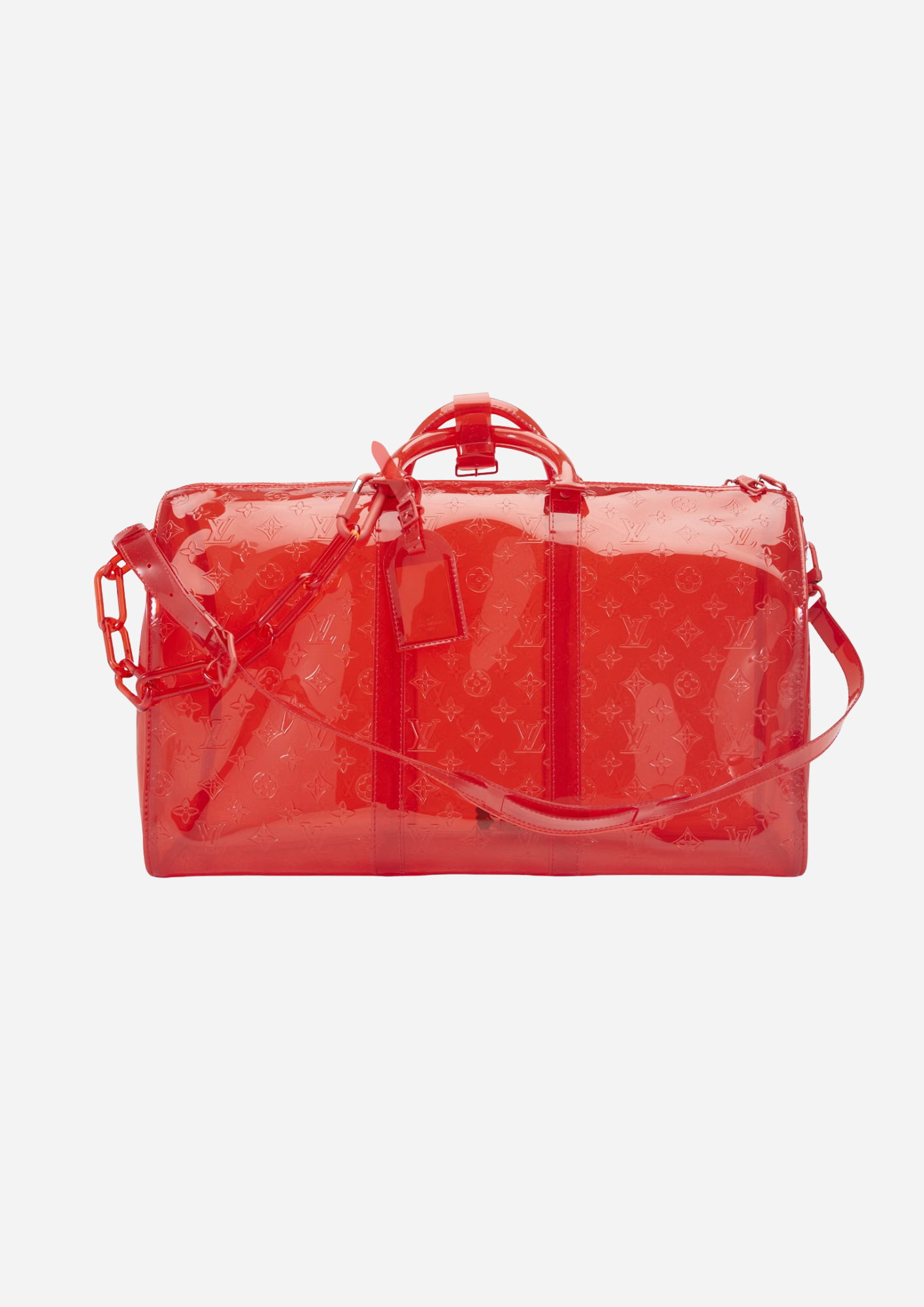
The Keepall Bandoulière is the clearest example of the first approach. Its horizontal, relatively soft structure allows the volume to adapt to its contents, while double handles and a shoulder strap offer different carrying options. In a size such as Keepall 50, width becomes a central part of the silhouette and immediately distinguishes the model from an ordinary day bag.
A shoulder or crossbody bag works on a completely different scale. The volume needs to stay close to the body, the strap determines the position of the bag and depth becomes just as important as width and height. A compact model can therefore have a strong visual presence despite offering far less capacity than a travel bag.
Size should not be read through centimetres alone: the relationship between dimensions, opening, internal organisation and the way the bag is actually carried is what matters.
Collaborations and reinterpretations of the Monogram
The Monogram has also functioned as a surface on which artists and designers can intervene without erasing Louis Vuitton's identity. Collaborations make it possible to recognise both the house codes and the visual language of the person reinterpreting them.
The work with Takashi Murakami illustrates this clearly. On models such as the Sunset, the Monogram remains visible but coexists with figurative elements, colours and embroidery that completely change the impact of the surface. Cherries introduce a more playful, narrative language, while the base continues to make the Louis Vuitton origin immediately legible.
These bags should therefore be considered differently from a purely colour-based variation of a classic model. The creative context, material and often the details, finishes and construction change. A collaboration can transform a familiar silhouette or use a specific format to give more space to a graphic intervention.
This is one reason why the model name alone is not enough when comparing two Louis Vuitton bags: collection, material and creative provenance can create substantial differences.
How to choose size and wearability
The choice of a Louis Vuitton bag should start from its intended use. If capacity is the priority, structures designed for travel or for carrying more belongings make sense; for an everyday bag, depth, opening and where the bag sits when worn deserve greater attention.
Double handles allow a more traditional hand carry, while a removable strap expands the ways the bag can be used. On crossbody models, adjustability is also important: two bags with similar dimensions can look very different if one sits high on the torso and the other falls closer to the hip.
Structure also affects practicality. A soft bag can adapt more easily to its contents, while a more rigid format retains a precise shape but offers less flexibility in how objects are arranged.
The best comparison therefore combines dimensions, capacity, weight, opening and carrying options, rather than choosing a model solely because it belongs to a particular Louis Vuitton family.
What to consider in a Louis Vuitton bag
Material and size are only part of the comparison. On a Louis Vuitton bag, it is also useful to examine leather trims, hardware, stitching, fastenings, strap and the accessories actually associated with the individual reference. These elements can change between apparently similar versions and contribute significantly to the character of the bag.
Colour and motif also carry different weight depending on the silhouette. Traditional Monogram canvas can appear relatively neutral on a large travel format, while denim, embroidery or colour contrasts can turn a smaller bag into the focal point of a look.
When comparing a Louis Vuitton with other luxury bags, it is therefore more useful to start from structure, material and intended use than from brand recognition alone. These elements explain why two models from the same house can answer completely different needs.
Buying online also requires attention to product verification. MilanoMarktPlace explains the process used to inspect selected items before sale on the dedicated product authenticity page.