


Luxury Small Leather Goods
Cardholders, coin purses and small leather accessories have to solve a lot in just a few centimetres. Luxury small leather goods combine internal organisation, materials and house details: from Dior’s compact constructions to Miu Miu’s matelassé surfaces, each format changes how cards, coins and small essentials are arranged without adding unnecessary bulk.
Explore more styles in our Luxury Designer Accessories selection.
3 products
Luxury small leather goods: designing within a few centimetres
A card holder or coin purse takes up little space, yet it has to solve many everyday actions. Taking out a card, opening a zip, separating coins and receipts or quickly finding what you need depends on the internal construction of the accessory much more than may appear from the outside.
This is why luxury small leather goods should not be judged only by logo and colour. Dimensions, number of compartments, opening system, thickness and leather rigidity determine how the object is actually used.
Within the selection of designer accessories, card holders and coin purses are the category in which organisation and materials need to coexist in the smallest space. Dior favours a more enclosed and organised construction, while Miu Miu also uses Matelassé workmanship on slim, compact formats.
Card holder or coin purse: what changes in use
An open card holder keeps cards immediately accessible and limits overall thickness. It is suitable for those who mainly use payment cards and documents and prefer to minimise volume inside a bag or pocket.
A structure with a zip protects the contents more fully and also allows coins, receipts or small objects to be carried. The format becomes slightly thicker but offers greater separation between the items transported.
A coin purse organised with gusseted compartments follows a third logic: it uses depth to divide contents and makes it easier to manage cards, cash and coins at the same time.
The choice therefore depends less on the commercial name of the accessory and more on what it needs to hold every day.
Dior Gravity: internal organisation and worked leather
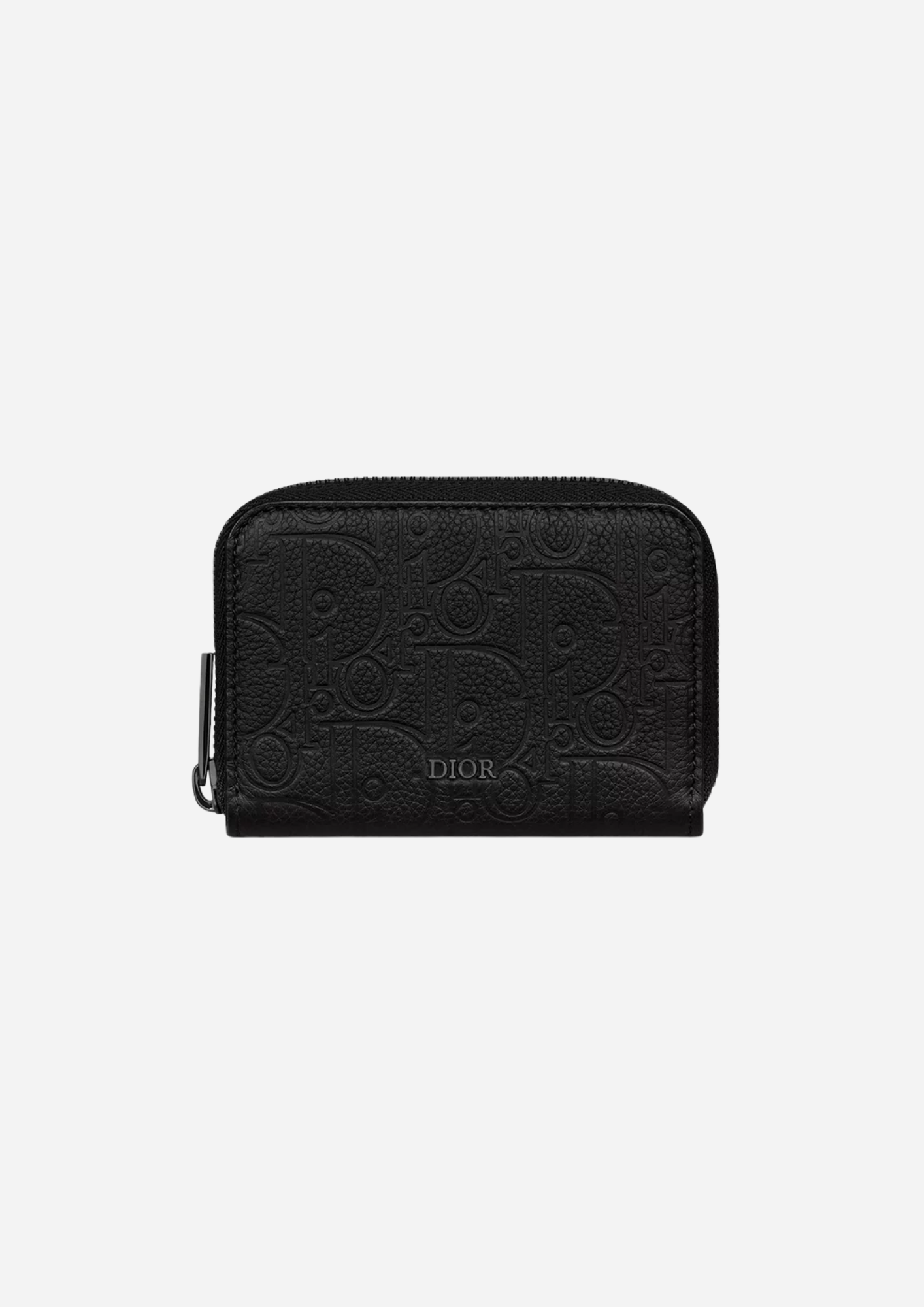
Dior Gravity interprets small leather goods through a compact but organised structure. A zip fastening fully protects the contents, while internal compartments and slots allow cards, coins and small documents to be separated.
The Gravity workmanship on black calfskin makes the surface an integral part of the model's identity without relying on a highly visible decorative element. On a small accessory, texture, edges, zip and metal finishes occupy a significant part of the surface and therefore become especially noticeable.
This is a different construction from a slim card holder: greater depth and full closure prioritise organisation and protection over immediate access alone.
The house language remains consistent with Dior bags, but is concentrated into a much smaller object in which every detail has to serve a precise function.
Miu Miu Matelassé: one surface, different constructions
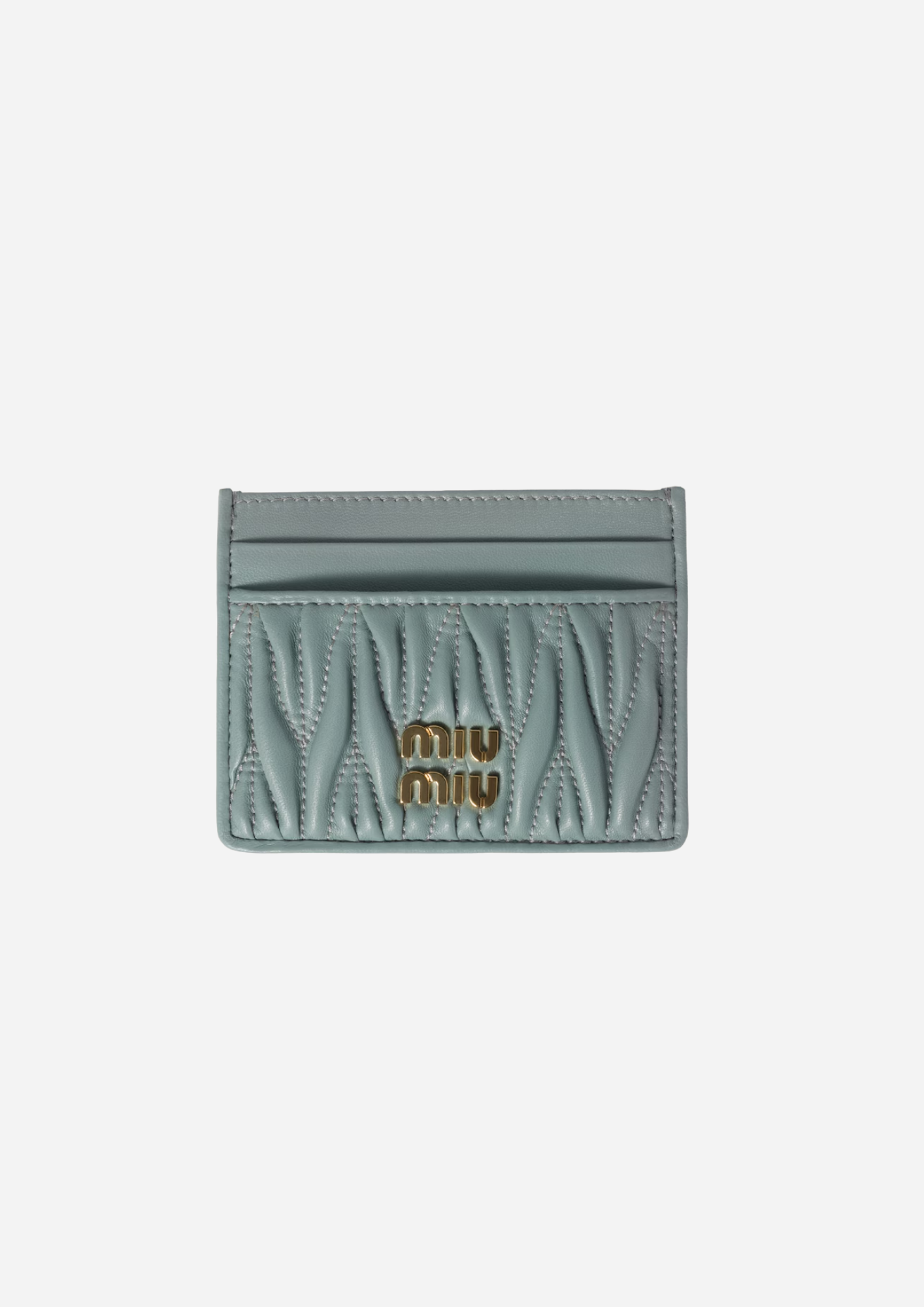
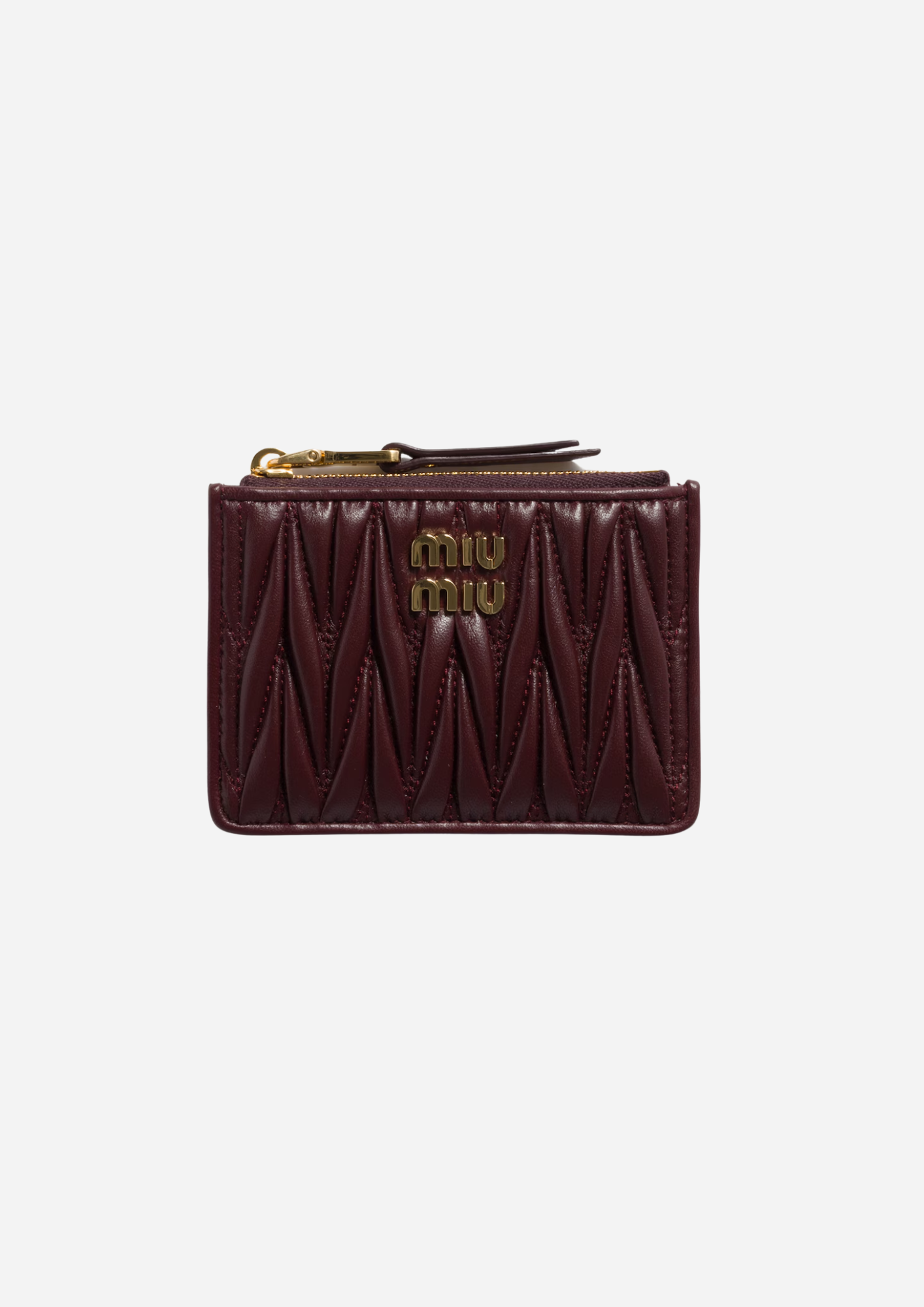
Miu Miu Matelassé nappa leather makes the accessory immediately recognisable through its soft, three-dimensional surface. The same workmanship can however be applied to very different structures.
An open card holder keeps a slim profile and leaves cards easy to access. The absence of an external closure reduces volume and focuses attention on the arrangement of the slots and the leather texture.
A zipped version instead uses the same Matelassé surface in a more enclosed construction. The zip, additional pockets and any removable accessories expand the possibilities of use and bring the format closer to a small pouch.
It is a good example of how two products from the same house and made from the same material can behave completely differently. On Miu Miu bags too, Matelassé changes character according to the shape it is applied to; in small leather goods this difference is concentrated into just a few centimetres.
Leather, zips and compartments: the details that change the format
In small leather goods, material is important but cannot be separated from construction.
Soft leather can make a frequently handled accessory more pleasant to the touch, while more structured surfaces retain their shape more firmly. Lining, zip type and edge rigidity also affect the overall impression.
The arrangement of compartments is equally important. Too many slots in a small space can quickly increase thickness when filled, while a simpler structure keeps the accessory slim but offers fewer organisational options.
It is therefore useful to look at external dimensions and internal configuration together. Two card holders with similar width and height can offer very different capacity depending on the number of slots, presence of pockets and fastening system.
How to choose between a card holder and a coin purse
The choice should start from what you actually carry.
If you use only a few cards and do not carry cash, a slim open card holder may be preferable. If you also need to store coins, receipts or small objects, a zipped construction may be more useful. A coin purse with internal compartments is better suited when different contents need to remain separated.
Before purchasing, check:
- external dimensions;
- number and arrangement of slots;
- presence of pockets or compartments;
- type of fastening;
- outer material and lining;
- any removable accessories;
- what is actually included with the reference.
Colour completes the choice, but should come after structure. Black, burgundy or lighter shades can change the visual presence of the accessory; capacity and internal organisation determine how practical it will be in everyday use.
Authenticity and details to verify
On designer card holders and coin purses, authenticity should not be assessed from a single element. Leather, workmanship, stitching, edges, zips, logos, markings, internal organisation and reference should be considered together.
The reduced dimensions make some details even more visible: stitch alignment, edge finishing and hardware quality occupy a large part of the total surface and should be consistent with the specific construction of the model.
MilanoMarktPlace explains the process used to verify selected items before sale on the dedicated product authenticity page.